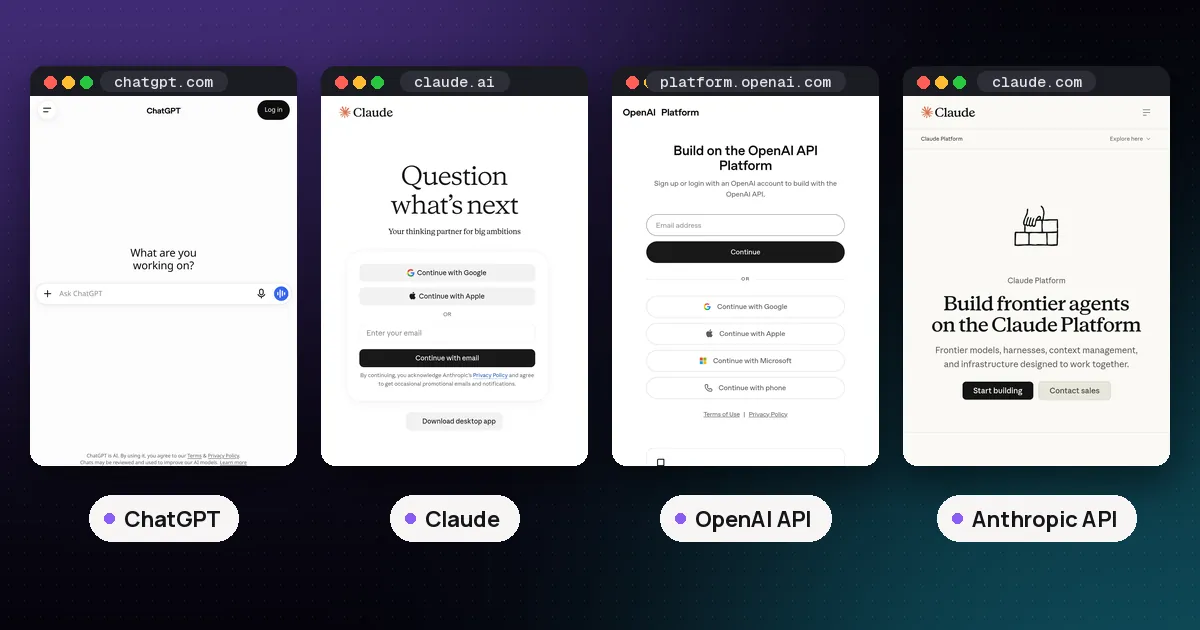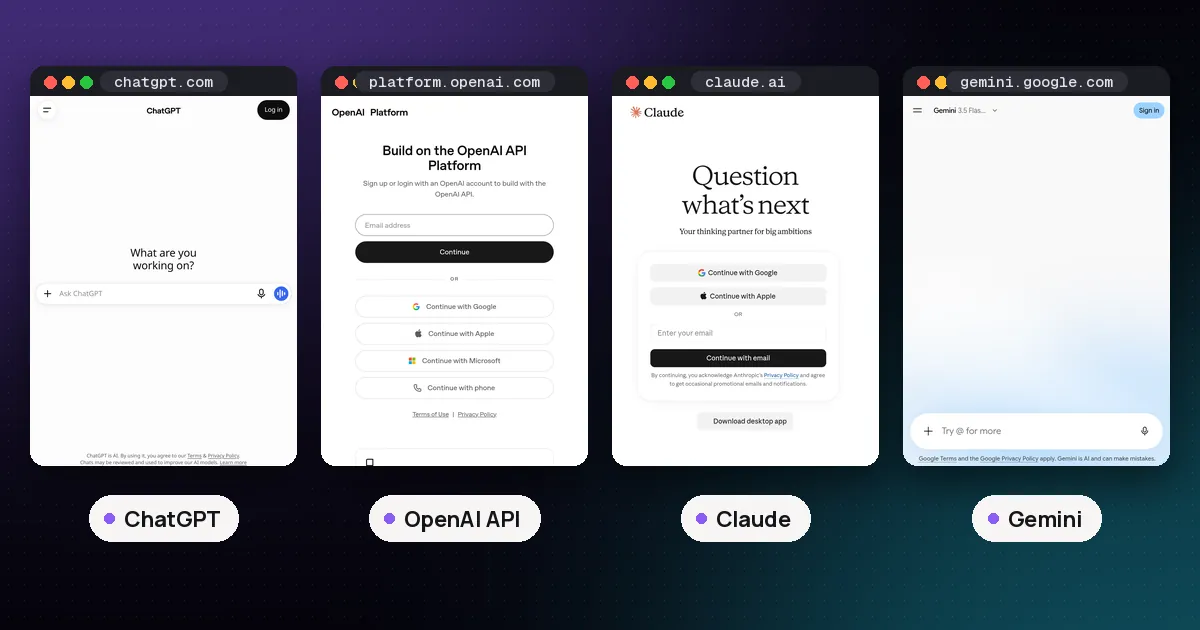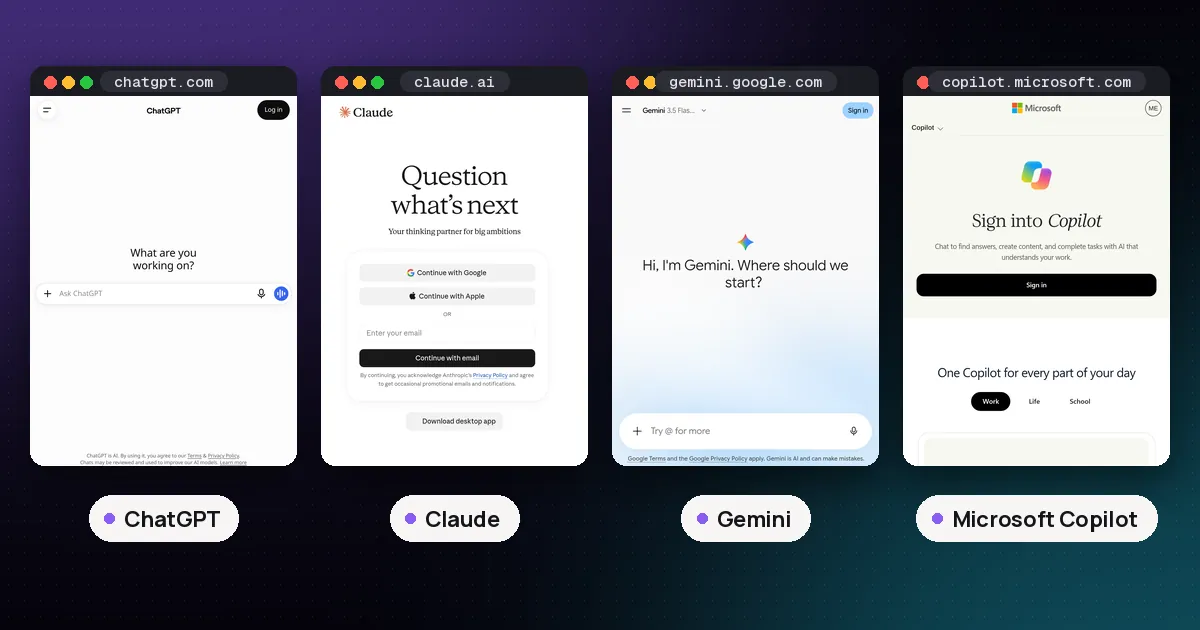
AI chatbot vs AI assistant comes down to scope. An AI chatbot is built mainly to hold a conversation: it answers questions, explains things and helps with one task at a time inside a chat window. An AI assistant uses the same kind of conversational AI but has a broader job: it can also work with your calendar, reminders, messages and other apps to get things done for you. Every modern AI assistant includes a chatbot, but not every chatbot is a full assistant.
That is the textbook answer IBM gives in its explainer on what a chatbot is. In October 2026 the practical answer is messier, because the line is moving from both sides. The classic voice assistants (Google Assistant, Siri, Alexa) have been rebuilt on top of large language model chatbots, while chatbots such as ChatGPT and Claude have picked up memory, connected apps and agents. This guide explains both terms, where each flagship product sits today, and which kind you need.
AI chatbot vs AI assistant at a glance
| Item | AI chatbot | AI assistant |
|---|---|---|
| Main job | Conversation: answer, explain, draft | Help you get things done across apps and devices |
| How you reach it | A chat window on a website or app | Voice, a phone button, a chat app, or built into the operating system |
| Access to your data | Usually only what you type or upload | Often your messages, email, calendar, photos or smart home |
| Takes actions | Rarely, and one step at a time | Sets reminders, sends messages, controls devices, after you ask |
| Typical examples (IBM) | ChatGPT, Claude, website support bots | Alexa, Siri, Google Gemini, Microsoft Copilot |
The examples column follows IBM's own classification. IBM treats them as overlapping categories, not rival products.
What is an AI chatbot?
A chatbot is software that talks with people through text or voice. IBM splits them into two groups. Traditional chatbots follow fixed rules, decision trees and scripts. AI chatbots use natural language processing, generative AI and large language models to understand what you mean, keep track of context and write new answers. IBM names ChatGPT and Claude as well known AI chatbots.
The key word is conversation. An AI chatbot is designed first to understand a request and reply well. If you want the technical layer underneath, our guide to ChatGPT vs LLM explains how a chatbot app wraps one or more language models.
What is an AI assistant?
IBM describes an AI assistant as an application that understands natural language and uses a conversational interface to complete tasks for a user. Its list of assistant jobs goes beyond chat: managing calendars, setting reminders, creating content, searching for information and working across several apps. Its examples are Amazon Alexa, Apple's Siri, Google Assistant, Google Gemini and workplace tools such as Microsoft Copilot.
IBM's AI agents vs AI assistants page adds two useful details. First, assistants are reactive: they begin with your prompt and usually rely on your direction through a task, suggesting actions and waiting for permission. Second, assistants do not necessarily have persistent memory, and when they remember your preferences, the underlying model is not learning from you. It only changes when the developer ships a new version.
Where AI agents fit
There is a third word on the spectrum. IBM defines AI agents as mostly proactive: they plan and take actions on their own to reach a goal, using the tools and permissions you give them. So the rough order is chatbot (talks), assistant (talks and acts when asked), agent (works toward a goal with less supervision).
Anthropic's Claude Duet, opened as a research preview in October 2026, is a clear example of the agent end. According to Anthropic's launch post, it sends a morning brief, checks your connected apps every few hours, keeps working on its own cloud computer when you step away, and asks for approval before it sends a message, makes a payment, signs a document or deletes anything. Our Claude Duet explainer covers it in detail, and are AI agents AGI? explains why agents are still not general intelligence.
The line blurred in 2026: assistants rebuilt as chatbots
The biggest change this year is that the famous voice assistants were replaced or rebuilt using the same technology as AI chatbots.
| Assistant | What changed in 2026 | Price |
|---|---|---|
| Google Assistant on Android | Replaced by Gemini on phones, tablets and paired devices from early September | Gemini app has a free tier |
| Siri | Siri AI, a rebuilt version, released in beta with iOS 27 on September 14 | Free, with daily limits on server features |
| Alexa | Alexa+ available to everyone in the US | Free with Prime; $19.99 a month without Prime |
Gemini replaced Google Assistant
In an August 6, 2026 post on its Assistant community forum, Google said Google Assistant on mobile devices was being discontinued and that Gemini would be the voice assistant experience on Android. Removal began in early September and could take a few weeks to reach everyone. Once it reaches a device, you cannot switch back. The change also covers Wear OS watches, compatible headphones and Android Auto projected from a phone. Cars with Google software built into the dashboard keep Assistant for now, and Nest and Google Home speakers and displays were not part of this change. By September 28, 9to5Google reported that Assistant was gone on every US and European account it checked.
Siri became Siri AI
Apple released Siri AI on September 14, 2026, calling it an entirely new version of Siri. Apple says it can hold follow up conversations, understand personal context across messages, emails and photos, act on what is on your screen and take actions inside apps. It comes with a dedicated Siri app that syncs conversation history through iCloud, which is a very chatbot style feature. Apple says the models behind it are the next generation of Apple Foundation Models, built in collaboration with Google and its Gemini models, running on the device and on Private Cloud Compute.
Apple's support page says you turn it on under Settings, Siri, Try Siri AI (Beta), which adds you to a waitlist. It is not available on iPhone in the EU or in mainland China. TechCrunch reports that iOS 27.2, released October 27, added French, Japanese, Korean, Portuguese and Spanish and lets Siri AI remember details from past conversations. Apple also says server features have daily usage limits and that expanded access will cost a fee in the future.
Alexa became Alexa+
Amazon says Alexa+ is available to everyone in the US and included at no extra cost for Prime members. Without Prime it costs $19.99 a month, and anyone can try a limited, text based Alexa+ chat at Alexa.com and in the Alexa app. Amazon's Alexa+ product page shows the same three tiers and lists jobs such as syncing household schedules, ordering rides and food, and smart home control.
And chatbots turned into assistants
The movement goes the other way as well. OpenAI's Memory help page says ChatGPT can remember preferences and details from past chats, saved memories, custom instructions, saved files and connected apps such as Gmail, depending on plan and region. You can review, correct or switch off all of it under Settings, Personalization, Memory. Anthropic's Claude Duet post confirms that Claude accounts already carry memory, skills and connected apps, which Duet reuses.
Once a chatbot remembers you, reads your email and acts in other apps when asked, it matches IBM's description of an assistant. That is why "is ChatGPT a chatbot or an assistant?" has no clean answer in 2026. It started as a chatbot and now does assistant work.
If you are choosing between the big chat apps, our ChatGPT vs Claude vs Gemini vs Grok comparison goes model by model, and Microsoft Copilot vs Claude covers the workplace assistant angle.
What people mean by "AI chatbot assistant"
You will often see the two words combined. Usually it just means an AI chatbot that does some assistant work, which describes most flagship apps today.
"Assistant" is also used for specialized tools. Research tools such as Elicit and Consensus are often called AI research assistants. Elicit says it goes beyond chat with tables, multi step workflows and sentence level citations, and Consensus describes itself as an AI academic search engine for peer reviewed papers. Perplexity sits between a search engine and a chatbot; see ChatGPT vs Perplexity. These are narrow assistants for one kind of work, not general helpers that manage your day.
Pros and cons of each
AI chatbot
Pros:
- Simple to start: open a website or app and type
- Sees only what you choose to share, which limits privacy risk
- Strong for writing, explaining, brainstorming and research questions
Cons:
- Cannot act in your other apps unless you connect them
- You repeat context unless memory is switched on
- Answers can still be wrong, so important facts need checking
AI assistant
Pros:
- Works where you already are: phone button, voice, smart speaker
- Can use personal context such as messages, calendar and photos
- Handles quick actions like reminders, messages and device control
Cons:
- Needs wide access to your data, so settings matter more
- Features vary by device, country and language (Siri AI is still a beta and not on iPhone in the EU)
- Some features sit behind subscriptions or daily limits
Whichever you use, our guide on how to use AI chatbots safely covers the privacy switches that matter.
Which do you need?
- You mostly want answers, drafts or explanations: an AI chatbot such as ChatGPT, Claude or Gemini on the web is enough. You do not need it connected to anything.
- You want hands free help on your phone or at home: the assistant built into your device is the natural choice: Gemini on Android, Siri AI on a supported iPhone, Alexa+ on Echo devices.
- You want help that spans your email, calendar and files: a chatbot with memory and connected apps, or a workplace assistant like Copilot, fits best. Connect only what the job needs.
- You want work done while you are away: that is agent territory, and it calls for the most care about permissions and approvals.
FAQ
Is ChatGPT a chatbot or an AI assistant?
Both, depending on how you use it. IBM classifies ChatGPT as an AI chatbot, and that is how it started. With memory, connected apps such as Gmail and agent features, it now also does the cross app work IBM uses to define an assistant.
Is Gemini a chatbot or an assistant?
Gemini is a chatbot app that became Google's main assistant. Since September 2026 it has replaced Google Assistant on Android phones, tablets and paired devices, so pressing the power button or saying "Hey Google" opens Gemini.
What is the difference between an AI assistant and an AI agent?
IBM's short version: assistants are reactive and do tasks when you ask, while agents are proactive and plan and act on their own toward a goal using the tools and permissions they have. Claude Duet, which checks your apps and works in the background, is an example of an agent.
Is Alexa+ free?
For Prime members in the US, yes. Without Prime, Amazon charges $19.99 a month for full access, and a limited free chat is available at Alexa.com and in the Alexa app.
Are AI assistants smarter than AI chatbots?
Not necessarily. In 2026 many assistants run on the same kind of large language models as chatbots; Siri AI, for example, uses Apple models built with Google's Gemini. The difference is mainly access and actions, not raw intelligence.