The Anthropic IPO is not trading yet. On October 26, 2026, Anthropic, PBC (the company behind Claude) publicly filed a Form S-1 registration statement with the US Securities and Exchange Commission for an initial public offering of Class A common stock on the Nasdaq Global Select Market under the ticker ANT. The filing does not yet set a share price range, a share count or a listing date, so nobody can buy ANT shares today. What the S-1 does give is the first audited look at the lab's business: $16.286 billion of revenue in the first half of 2026, an $80.748 billion net loss driven mostly by accounting charges, and a governance setup with five classes of stock that Anthropic itself says has no direct public company precedent.
This guide is based on the Anthropic S-1 on SEC EDGAR and Anthropic's own announcement of the filing, cross checked against CNBC's coverage of the filing and The Wall Street Journal. It reflects what was public on the morning of October 29, 2026. It explains the filing; it is not investment advice.
Anthropic IPO at a glance
| Item | What the filing says |
|---|---|
| Company | Anthropic, PBC, a Delaware public benefit corporation |
| Public filing date | October 26, 2026 (CNBC reports a confidential filing in June) |
| Exchange and ticker | Nasdaq Global Select Market, ANT |
| Shares offered | Class A common stock, sold by Anthropic and by selling stockholders |
| Price range | Not set yet ("between $ and $" is left blank) |
| Lead underwriters | Goldman Sachs and Morgan Stanley, with 20 more banks listed |
| Use of proceeds | General corporate purposes, including compute and infrastructure, hiring and possible acquisitions |
| Named competitors | OpenAI and Google |
Anthropic will receive money only from the shares it sells itself. Proceeds from shares sold by existing holders go to those holders, as the S-1 cover page states.
What the S-1 shows about revenue
The headline number is growth. The consolidated statements of operations in the S-1 show revenue rising from $41 million in 2023 to $386 million in 2024 and $4.585 billion in 2025. In the six months ended June 30, 2026, revenue was $16.286 billion, up from $1.163 billion in the same period of 2025.
| Period | Revenue | Net loss |
|---|---|---|
| Full year 2023 | $41 million | $1.531 billion |
| Full year 2024 | $386 million | $8.309 billion |
| Full year 2025 | $4.585 billion | $41.965 billion |
| First half 2025 | $1.163 billion | $12.969 billion |
| First half 2026 | $16.286 billion | $80.748 billion |
A few other figures from the filing help explain where the money comes from:
- Big customers. As of September 30, 2026, more than 11,900 customers paid Anthropic $100,000 or more over the trailing twelve months, more than 1,900 paid $1 million or more, and about 250 paid $10 million or more.
- Net revenue retention of about 900%. Existing business customers spent roughly nine times as much as they did a year earlier. The S-1 excludes Claude Pro and Max subscribers from this metric, because flat monthly plans do not expand the same way.
- Cloud marketplaces. About 48% of first half 2026 revenue came through Amazon Web Services, Google Cloud and Microsoft Azure marketplaces, which bill customers and pass payment on to Anthropic after fees.
- Customer concentration. No single customer was more than 10% of revenue in the first nine months of 2026, but the top five together made up about 25%.
- Headcount. Employees grew from about 940 at the end of 2024 to about 5,300 by September 30, 2026.
If you use the API, our guide to whether the Anthropic API is free covers how that usage based billing works for individual developers.
Why an $80.7 billion loss is less scary than it sounds
Read the loss line carefully. In the first half of 2026 Anthropic's operating loss was $693 million, much smaller than a year earlier ($2.135 billion), even though it spent $8.945 billion on compute and infrastructure. The giant net loss comes almost entirely from a separate line: a $72.388 billion charge for changes in the fair value of convertible notes, derivative liabilities and SAFEs. CNBC reports that Anthropic ties this to the rise in its own valuation, which makes those instruments more expensive to carry on the books.
That is an accounting effect, not cash leaving the building. As of June 30, 2026 the S-1 shows $131.651 billion in cash, cash equivalents and short term investments. The flip side is commitments. The filing describes very large purchase commitments and leases for compute across AWS Trainium, Google TPUs, NVIDIA GPUs and AMD GPUs, and it leaves the total committed spend blank for now. CNBC tallied individual deals in the filing, including at least $110 billion with Amazon through 2036 and $114.5 billion on Google TPUs through 2033.
The 2025 column also includes a one time $1.5 billion line called the "Bartz settlement," the copyright case brought by authors.
The share classes and who controls Anthropic
This is the part of the filing that makes Anthropic different from any other big tech listing. The S-1 describes five classes of common stock:
| Class | Who holds it | Votes | Economic rights |
|---|---|---|---|
| Class A | Public buyers and existing holders | One vote per share | Yes |
| Class N | Mainly strategic partners such as Amazon and Google | None, except where law requires | Yes; converts to Class A when sold to an unaffiliated party |
| Class T | The Long Term Benefit Trust | Elects and removes the Class T directors, a board majority | None |
| Class F | A single share held by a Founder LLC owned by the seven cofounders | 50.1% of total voting power on general matters | None |
| Class E | Employees, excluding cofounders | Only on certain limited matters | None |
In plain terms, two groups control the board. The Long Term Benefit Trust (LTBT), a body of five financially disinterested trustees with backgrounds in AI safety, national security, public policy and social enterprise, elects a majority of directors. The Founder LLC, whose members are Dario Amodei, Daniela Amodei and Anthropic's five other cofounders, holds 50.1% of the votes on matters put to shareholders, including electing the remaining directors. The S-1 says the two together can elect every member of the board, and it warns that this structure may make takeovers and proxy fights harder.
Anthropic has described the trust since 2023 on its Long Term Benefit Trust page. The IPO filing is the first time the trust's role sits inside a public market prospectus.
How the safety mission shows up in the filing
As a public benefit corporation, Anthropic must legally balance shareholder returns against the interests of people affected by its conduct and its stated purpose, which the S-1 defines as developing and maintaining advanced AI responsibly for the benefit of humanity over the long run. The filing adds a few concrete pieces:
- A public benefit fund. Anthropic contributed 846,840,960 Class N shares, about 5% of fully diluted shares as of June 30, 2026, to a wholly owned subsidiary called the Anthropic Public Benefit Fund. The board may add up to 2% more each time the share price rises 50% above the previous milestone, starting from the IPO price.
- Cofounder pledges. The cofounders have each pledged to give 80% of their personal Anthropic equity to philanthropic causes.
- Safety risks as business risks. The risk factors say Anthropic's models "may behave in unintended, misaligned, or autonomous ways," and that harm from misuse could hurt the business.
For the safety rules Anthropic already publishes, see our comparison of the Preparedness Framework and the Responsible Scaling Policy. Our explainer on what AI safety is gives the wider context.
Pros and cons of the deal, as the filing describes it
Strengths the S-1 points to
- Revenue that grew about fourteen times year over year in the first half of 2026.
- A near breakeven operating result in that half despite heavy compute spending.
- A large cash balance and a broad base of enterprise customers.
- Distribution on all three major clouds.
Risks the S-1 points to
- Enormous, mostly undisclosed compute commitments that must be paid whether or not demand holds.
- Dependence on a few cloud partners that also sell competing models.
- Public shareholders with Class A stock cannot outvote the trust and the Founder LLC.
- A long risk factor section covering compute supply, chip manufacturing concentration in Taiwan, regulation, misuse and model misbehavior.
What it means if you use Claude
Nothing changes for Claude users the day the S-1 is filed. Plans, prices and models stay the same unless Anthropic announces otherwise; check Claude and the Anthropic API listings for current details. Over time, public company reporting means quarterly results and more disclosure about pricing, compute and safety spending.
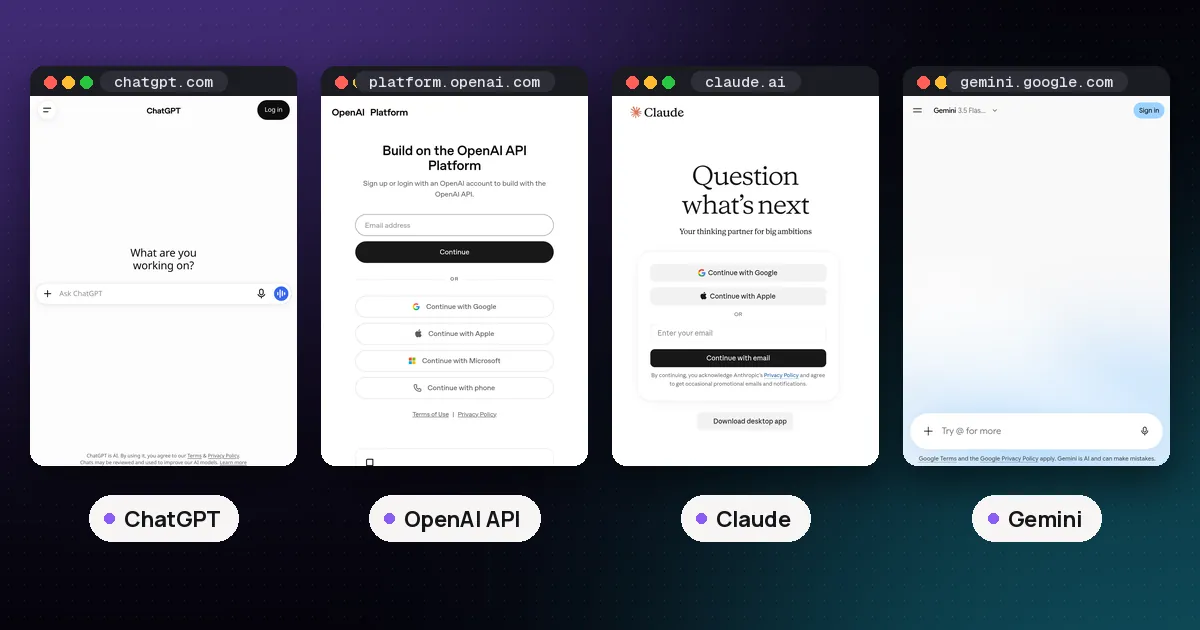
The filing names OpenAI and Google as direct competitors. If you are choosing between flagship assistants rather than shares, our ChatGPT, Claude, Gemini and Grok comparison and the model breakdown in Claude Fable vs Opus vs Mythos are the better starting points. You can also compare ChatGPT, Gemini and Google DeepMind in our directory.
What is still unknown
Several key facts were blank in the October 26 filing:
- The price range per share and the number of shares offered.
- The valuation Anthropic is targeting (WSJ notes it was not disclosed).
- The exact listing date. A company can start selling only after the SEC declares the registration statement effective.
- Revenue for the quarter ended September 30, 2026, and the total committed compute spend, both left blank.
Expect an amended S-1 with a price range before the roadshow. Until then, any ANT price or valuation you see is an estimate, not a filed number.
FAQ
When is the Anthropic IPO date?
There is no date yet. Anthropic filed its public S-1 on October 26, 2026, and said the number of shares and the price range have not been determined. Trading can start only after the SEC declares the registration effective and the offering is priced.
What is the Anthropic stock ticker?
Anthropic has applied to list its Class A common stock on the Nasdaq Global Select Market under the symbol ANT.
Can I buy Anthropic stock now?
Not on a public exchange. Until the offering prices and trades, Anthropic shares are held by employees, early investors and strategic partners. After listing, Class A shares would trade like any other Nasdaq stock through a brokerage account.
How much revenue does Anthropic make?
The S-1 reports $16.286 billion of revenue for the six months ended June 30, 2026, compared with $1.163 billion a year earlier. Full year 2025 revenue was $4.585 billion.
Who controls Anthropic after the IPO?
Control is split. The Long Term Benefit Trust elects a majority of the board through Class T stock, and a Founder LLC owned by the seven cofounders holds 50.1% of shareholder voting power through a single Class F share. Public Class A holders get one vote per share but cannot outvote those two groups.
Is Anthropic still a public benefit corporation?
Yes. Anthropic, PBC remains a Delaware public benefit corporation, which requires the board to balance stockholder returns with the interests of people affected by its conduct and its stated mission of responsible AI development.